Coordinating Reel Spin Intervals with Table Reward Sequences in Networked Casino Systems
Written by Jakob Ludwig · Aug 27, 2026
Coordinating Reel Spin Intervals with Table Reward Sequences in Networked Casino Systems
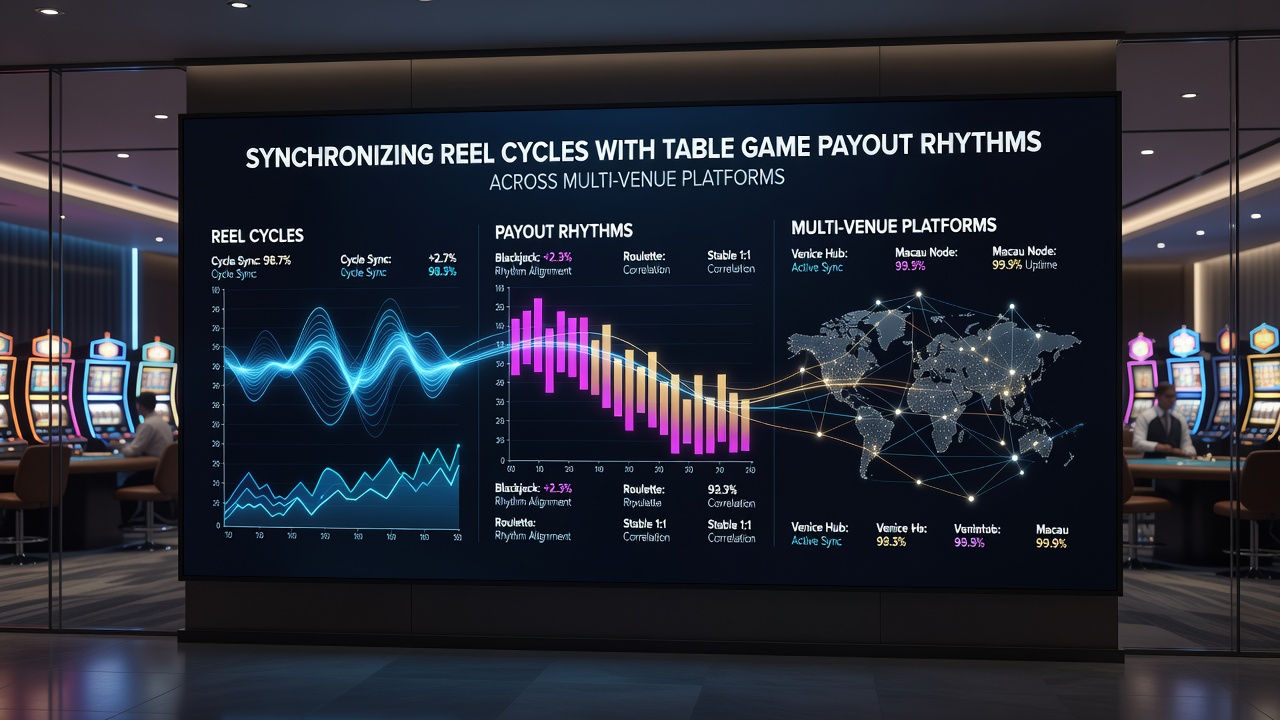
Operators managing slot machines alongside table games have developed methods to align reel cycle timings with payout sequences in table environments, and these approaches extend across separate physical locations connected through shared platforms. Reel cycles in modern slot systems follow programmed intervals determined by random number generators, while table games such as roulette and blackjack operate on dealer-paced rhythms that produce outcomes at variable rates depending on player decisions and game rules. Data from industry reports shows that synchronization tools adjust these timings so payout events occur in coordinated patterns rather than isolated bursts.
Technical Foundations of Reel Cycle Alignment
Slot reel cycles consist of spin durations, reel stop positions, adn payout trigger frequencies that software controls set in advance. Table game payout rhythms depend on factors including bet placement speed, dealer efficiency, and specific rules for games like baccarat or craps. Platforms that link multiple venues use centralized servers to monitor both types of cycles and apply timing offsets, and this process relies on real-time data feeds that track machine states and table activity simultaneously. According to figures from the Nevada Gaming Control Board, integrated systems have reduced variance in daily payout distribution by measurable margins when operators apply these alignment protocols across sites.
Software modules handle the mapping of reel intervals to table sequences by assigning priority weights to different game types, and they recalibrate during peak hours to maintain balance. One implementation case involved a network operator who adjusted reel stop delays to match average roulette spin times at connected properties, and the result produced steadier revenue streams without altering individual game mathematics. Researchers at academic institutions have examined these adjustments through simulation models that replicate multi-venue conditions, and their findings confirm that precise timing coordination depends on accurate latency measurements between locations.
Multi-Venue Platform Implementation
Distributed casino networks connect venues through secure data links that transmit cycle information in milliseconds, allowing adjustments to propagate across sites without noticeable delay. These platforms incorporate sensors on physical tables and embedded software in slot cabinets to collect cycle data continuously. Operators in Canada have reported using similar architectures where provincial regulators require documented synchronization logs for compliance audits, and this practice ensures that payout patterns remain consistent even when venues operate under different local rules.

As of August 2026, several platform providers have released updates that include predictive algorithms capable of forecasting table game rhythms based on historical session data. These updates allow operators to pre-align reel cycles during scheduled maintenance windows, and the process occurs without interrupting ongoing play. Industry organizations such as the European Gaming and Betting Association have published guidelines that describe minimum standards for data accuracy in these systems, and operators who follow the guidelines achieve tighter synchronization across their portfolios.
Operational Adjustments and Data Patterns
Staff at networked venues monitor dashboards that display real-time cycle overlaps, and they intervene when deviations exceed preset thresholds. For instance, a cluster of slot machines showing extended reel cycles can trigger automatic table game speed modifications at linked sites to restore alignment. Studies conducted by university research teams have quantified how these interventions affect overall session lengths, and the data indicates that coordinated cycles extend average player engagement periods across the network.
Payment processing systems also factor into the synchronization model because jackpot triggers from reels must align with table game bonus distributions to avoid concentrated payout windows. Platforms achieve this by staggering bonus activation times according to the established cycle map, and external audits verify that the staggering remains random within the controlled parameters. Reports from Australian regulatory bodies highlight that operators maintaining these maps demonstrate lower dispute rates related to perceived payout clustering.
Future Developments in Cycle Coordination
Platform developers continue to refine the algorithms that connect reel and table cycles, with emphasis on incorporating machine learning to adapt to changing player volumes. Venues that adopt these refinements report smoother revenue curves when data from all sites feeds into a single coordination engine. Observers note that the approach scales effectively when new locations join the network, provided the underlying data infrastructure maintains consistent update rates.
Conclusion
Methods for coordinating reel spin intervals with table reward sequences have become standard features in multi-venue casino operations, supported by centralized platforms and verified through regulatory data collection. These systems rely on continuous monitoring, precise timing offsets, and documented compliance practices to function across separate locations. As networks expand, the same principles guide further refinements that maintain alignment without modifying core game probabilities.